







Executive Summary: The never-ending cookie saga
After years of announcements, delays and backtracking, Google performed a surprising U-turn in July 2024: third-party cookies in Chrome will not be abolished. What was originally planned for 2022, then postponed to 2023, then to 2024 and finally to 2025, is now completely off the table. Instead, Chrome users will be able to decide for themselves how they want to handle cookies in future.
This decision presents companies in German-speaking countries with new challenges: Years of investment in cookieless tracking technologies are suddenly in question, while at the same time the legal requirements of the GDPR remain unchanged. For B2B companies in Germany, Austria and Switzerland, this means both uncertainty and new opportunities in the area of web analytics.
Market analysis: What Google's chaos means for DACH companies
The current situation of cookie tracking
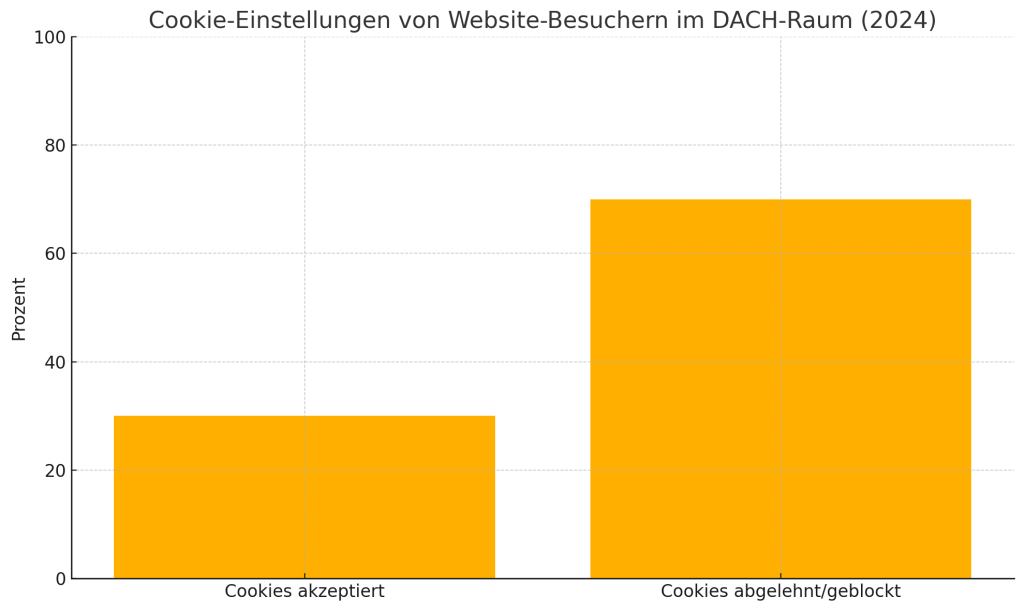
The reality of modern web tracking is sobering: recent studies show that only about 30% of website visitors accept cookies, while 70% reject or actively block them by default. This means that traditional cookie-based analytics tools such as Google Analytics can only capture a fraction of actual website traffic.
Dr Sarah Müller, data protection expert at the Technical University of Munich, explains: "Companies rely on data that at best only reflects a third of their actual user activities. This data gap leads to poor decisions in marketing and product development."
Economic impact of cookie uncertainty
The repeated delays and Google's final U-turn have significant economic consequences for companies in the DACH region:
Investment uncertaintyMany companies have invested millions in cookieless tracking technologies since 2020. A study by management consultants McKinsey from 2024 shows that German companies have spent an average of 40% of their IT budgets for marketing technology on cookie alternatives in the last three years.
ROI problemIncomplete data leads to suboptimal marketing decisions. According to an analysis by the Hamburg-based digital agency Dept, German e-commerce companies lose an average of 23% of their marketing ROI due to insufficient tracking data.
Distortion of competitionWhile large corporations can develop their own first-party data strategies, medium-sized companies are struggling with fragmented data sources and rising technology costs.
Market dynamics for analytics providers
Google's indecision has paradoxically boosted the market for Google Analytics alternatives. Data protection-compliant solutions from Europe are experiencing explosive growth:
- Matomo (originally Piwik) reported growth of 180% among German enterprise customers in 2024
- Plausible analytics recorded an increase of 340% in DACH registrations
- Specialised cookieless analytics providers such as staging.trackboxx.com benefit from the demand for GDPR-compliant, precise tracking solutions
Technical implications and challenges
Server-side tracking as a key technology
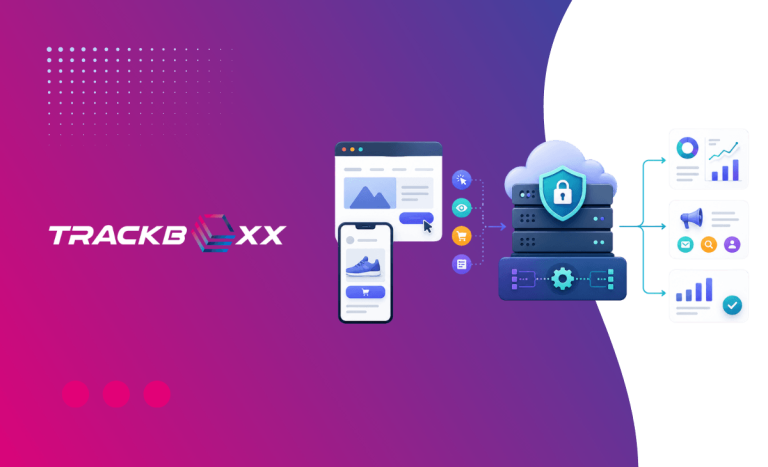
The future of web analytics lies in server-side tracking methods that work independently of browser cookies. These technologies offer several advantages:
PrecisionServer-side tracking captures all website interactions, regardless of cookie settings or ad blockers. Comparative studies show that server-side solutions can capture up to 95% of actual traffic, while cookie-based tools are at a maximum of 30%.
PerformanceSince the data is collected on the server, website load times are not affected by additional JavaScript tags. Google's Core Web Vitals benefit measurably from this approach.
Data protection by designServer-side solutions can already implement GDPR-compliant anonymisation and pseudonymisation during data collection.
First-party data strategies
The development of robust first-party data strategies is becoming a question of survival for DACH companies:
Customer Data Platforms (CDPs)Companies such as BMW and SAP have already implemented comprehensive CDP systems that consolidate data from various touchpoints and are fully GDPR-compliant.
Progressive Web Apps (PWAs)These make it possible to collect user-centred data directly without having to rely on third-party cookies.
Zero-Party DataDirect dialogue with customers through surveys, preference centres and interactive content is becoming increasingly important.
Legal compliance aspects: GDPR as a competitive advantage
Different regulatory landscapes in the DACH region
While the GDPR forms the framework for all three countries, there are important national differences:
GermanyThe Telecommunications and Telemedia Data Protection Act (TTDSG) further tightens the cookie regulations. Companies must obtain explicit consent and provide detailed data protection declarations.
AustriaThe Austrian data protection authority interprets the GDPR particularly strictly when it comes to data transfer to third countries. US analytics tools are under closer scrutiny.
SwitzerlandAlthough not a member of the EU, Switzerland has introduced similarly strict regulations with the revised Data Protection Act (revDSG). Swiss companies are increasingly favouring local data storage.
Legal certainty as a business model
The regulatory uncertainty surrounding international analytics tools creates market opportunities for European providers:
Schrems II problemUS analytics tools continue to struggle with the effects of the Schrems II judgement. Data transfers to the USA remain legally controversial.
Local data storageDACH companies increasingly prefer analytics solutions with servers in the EU in order to minimise legal risks.
Case studies: Successful migrations in the DACH region
Case Study 1: German online retailer increases conversion by 34%
A leading German fashion retailer switched from Google Analytics to a cookieless analytics solution in 2023. The challenge: The company lost 60% of its tracking data due to cookie banners.
SolutionImplementation of a server-side tracking system with first-party data integration.
Results:
- 95% Data acquisition instead of previously 40%
- 34% Increasing the conversion rate through better user understanding
- 50% Reduction of customer acquisition costs
- Full GDPR compliance without any loss of performance
Case Study 2: Austrian SaaS company optimises marketing ROI
A Viennese SaaS provider was struggling with fragmented data from various marketing channels. Google Analytics only provided incomplete data on the customer journey.
SolutionMigration to an integrated cookieless analytics platform with CRM integration.
Results:
- 200% Improvement of marketing attribution
- 45% Reduction in cost per acquisition
- Clear identification of the most profitable marketing channels
- Legally compliant data storage in Austrian data centres
Case Study 3: Swiss B2B company conquers new markets
A Swiss mechanical engineering company wanted to manage its international expansion in a data-driven way, but failed due to incomplete analytics data.
Solution: Development of a cookieless analytics infrastructure with multi-touch attribution.
Results:
- Complete visibility of the international customer journey
- 60% more precise lead qualification
- 25% Increase in sales conversion
- Compliance with local data protection laws in all target markets
Specific recommendations for action for DACH companies
Immediate measures (0-3 months)
1. perform an analytics audit Analyse your current data quality: What percentage of your website visitors are actually tracked? Compare server logs with analytics data to quantify the data gap.
2. check legal compliance Have your current analytics tools evaluated by a data protection expert. US tools in particular harbour legal risks that can intensify in the short term.
3. identify first-party data sources Capture all available internal data sources: CRM systems, email marketing, customer support, sales data. These form the foundation of your cookieless analytics strategy.
Medium-term strategies (3-12 months)
1. migration to cookieless analytics Implement a server-side analytics solution that works independently of browser cookies. Pay attention to this:
- GDPR-compliant data processing
- Local data storage in the EU
- Complete API integration with existing systems
- Granular user consent management
2. build a customer data platform Consolidate all customer data in a centralised platform. This enables:
- 360-degree view of the customer journey
- Precise marketing attribution
- Personalised user experiences
- Data protection-compliant segmentation
3. team training and change management Prepare your marketing and analytics teams for the new technologies. Cookieless analytics requires different mindsets and methods than traditional tools.
Long-term transformations (12+ months)
1. development of proprietary analytics expertise Develop internal expertise in modern analytics methods:
- Machine learning for customer lifetime value prediction
- Advanced Attribution Modelling
- Real-time personalisation
- Predictive analytics for demand forecasting
2. ecosystem integration Link analytics data with all relevant business processes:
- Marketing Automation
- Sales CRM
- Customer Support
- Product Development
- Supply Chain Management
3. competitive advantages through data quality Use your complete, GDPR-compliant data as a strategic advantage:
- More precise market analyses
- Better customer understanding
- Optimised product development
- More efficient resource allocation
The future of web analytics without cookies
Technological trends
Artificial intelligence in analyticsMachine learning algorithms are becoming increasingly important in order to generate meaningful insights from cookieless data. AI can recognise user patterns without tracking individual users.
Edge ComputingShifting analytics calculations to the edge of the network reduces latency and improves data protection through local processing.
Blockchain-based identity solutionsDecentralised identity systems could enable user-controlled, data protection-compliant tracking solutions in the future.
Regulatory developments
The EU is working on further tightening of data protection regulations:
Digital Services Act (DSA)Tightens transparency obligations for online platforms and analytics providers.
Digital Markets Act (DMA)Targets large tech companies and could further weaken the market position of Google Analytics.
ePrivacy RegulationOnce adopted, it will harmonise and tighten cookie regulations across the EU.
Market forecasts for the DACH region
Experts are forecasting fundamental market shifts:
- 202540% of German companies will have switched to cookieless analytics
- 2026: The market share of European analytics providers will double
- 2027: Server-side tracking becomes the standard for privacy-sensitive industries
Prof Dr Michael Weber from the University of St. Gallen predicts: "Companies that rely on cookieless analytics now will have a sustainable competitive advantage in five years' time. Data quality and compliance security will become decisive differentiators."
Conclusion: Creating opportunities from Google's chaos
Google's years of indecision regarding third-party cookies initially unsettled companies in the DACH region, but ultimately also opened up new opportunities. The move away from cookie-dependent analytics tools is not just a technical necessity, but a strategic advantage.
Companies that act now will benefit:
- Complete data instead of fragmented cookie-based collection
- Legal certainty through GDPR-compliant, European solutions
- Competitive advantages through more precise customer analyses
- Future security Independent of browser developments
The cookie era is coming to an end - not because of Google's decisions, but because of the expectations of privacy-conscious users and strict regulations. Companies that see this transformation as an opportunity and invest in modern, cookieless analytics infrastructures will be the winners of the post-cookie era.
The question is no longer whether you should switch to cookieless analytics, but how quickly you can complete this transformation. In a world where data quality determines business success, you can't afford to work with incomplete information.
Want to learn how cookieless analytics can help your business? staging.trackboxx.com offers GDPR-compliant, server-side analytics solutions that capture 95% of your website traffic - all without cookies. Contact us for a free data quality analysis.