







For years, online visibility meant Google. That is beginning to change. As people turn to services such as ChatGPT, they increasingly receive an answer inside a conversation instead of choosing from a page of blue links.
The crucial point is that AI assistants draw on information from across the web, but not always from the sources or search platforms marketers expect.
What many marketers overlook: Bing helps power ChatGPT search
When ChatGPT searches the live web, Microsoft Bing is an important search partner. Microsoft’s close relationship with OpenAI has made the Bing ecosystem relevant far beyond Bing’s own search page.
A number-one Google ranking therefore does not automatically guarantee a mention in ChatGPT. A response may draw on:
- the model’s training data,
- or a live web search and retrieved sources.
That is why Bing SEO has gained new relevance — even though Bing’s direct search-market share remains comparatively small.
Why “ChatGPT SEO” is difficult to pin down
ChatGPT is not a conventional search engine. It does not present a stable ranked list: it generates an answer for the specific conversation and may mention only a small number of sources.
In practice, that means:
- You cannot guarantee visibility in ChatGPT.
- There are no guaranteed rankings.
- Only some responses include links, usually to sources the system regards as useful and credible.
“ChatGPT SEO” is therefore uncertain by nature. It is less a race for a fixed position than a competition for relevance and trust.
What about Google Gemini?
Google is responding to the same shift.
Gemini is integrated into Google’s evolving AI search experience. Google frequently presents supporting links alongside AI-generated answers, although the format and prominence vary by query and market.
Conventional SEO still matters here, particularly clear structure, topical authority and trustworthy sources. For more detail, read our guide to Content strategy.
Seven practical ways to improve visibility in AI search
You cannot control an AI-generated answer, but you can make your material easier to discover, understand and trust.
1. Make structure work for you
Use descriptive headings, short paragraphs, useful lists and FAQs where they genuinely help. Present technical processes as clear, numbered steps.
2. Add structured data (Schema.org)
Use relevant schema markup to help search systems interpret products, FAQs, how-to content and articles. Markup should describe the page accurately rather than simply target a feature.
3. Write passages that answer real questions
Give a concise answer directly beneath the relevant heading, then add context and evidence. This is more useful than forcing readers through a long generic introduction.
4. Do not ignore Bing
Bing Webmaster Tools can help you monitor indexing and search performance outside Google. Our related guide explains the practical steps: "Why Bing is suddenly becoming more important".
5. Build topical authority, not just keyword coverage
A coherent body of specialist material is more persuasive than dozens of shallow posts across unrelated subjects.
6. Keep important information current
AI-assisted search can retrieve recently published sources. Review statistics, dates and claims regularly so that your pages remain dependable.
7. Monitor AI answers directly
Run a consistent set of representative questions and record which brands and sources appear.
"Which tools are suitable for SEO monitoring for SMEs?"
"What is the difference between Google SEO and Bing SEO?"
Check whether your domain is cited or linked.
How to tell whether ChatGPT refers visitors to your site
ChatGPT does not provide publishers with a complete analytics dashboard, but you can combine manual checks with referral data to look for evidence of visibility and visits.
Manual check:
- Ask ChatGPT a representative question with web search enabled.
- Use the questions your audience would genuinely ask, such as:
- "Which tools help with [topic]?"
- "Who offers good tips on [your specialism]?"
- Review the cited sources. Is your domain mentioned or linked?
What Trackboxx can show:
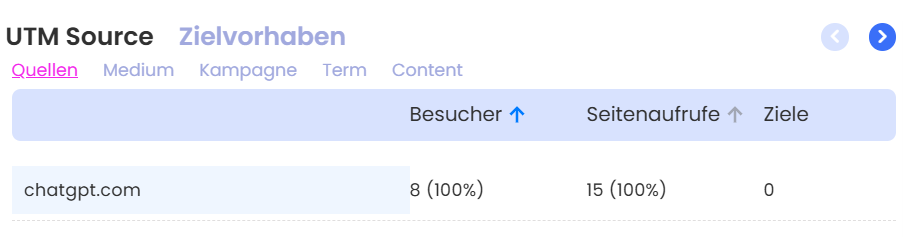
Trackboxx can identify visits referred by ChatGPT when the source information reaches your website, including appropriately tagged campaign links.
Tip: Look for ChatGPT in referral and UTM-source data. This confirms a visit from a linked response, although it cannot measure unclicked mentions.
The data remains incomplete, but regular manual checks and combined with referral monitoring can reveal whether your brand is beginning to appear in AI-assisted discovery.
Why publishing content is no longer enough
Helpful articles once offered a relatively direct route to Google visibility. AI-generated answers weaken that link between publishing, ranking and receiving a visit.
ChatGPT, Copilot and Gemini can answer the question before a user opens a publisher’s page. Links and citations exist, but they are selective. The system decides which organisations, products and sources become part of the answer.
Useful content alone may therefore fail to create visibility unless AI systems can connect the subject with a recognisable and credible brand..
Visibility increasingly belongs to brands that earn a mention — not simply those that publish the most.
For products, tools and services, a relevant mention inside an AI answer can influence awareness and trust even when it produces no immediate click.
For content marketing, this means: Publish less filler and invest more in strategic positioning.
Conclusion: ChatGPT SEO is an additional channel, not a replacement
Google remains central to online discovery, but search behaviour is diversifying. People ask AI assistants, receive direct answers and click fewer links.
Brands need to earn visibility in both environments. Bing, ChatGPT, Gemini and Perplexity form a growing discovery ecosystem, and learning how it works now can create an early advantage.
Related reading: Why AI visibility is about brand building, not just keywords