







Do you remember AltaVista? Lycos? Ask Jeeves? No? That is exactly the point. Search engines come and go. Only Google seems immortal. For more than 20 years, a single company has dominated the way we search the internet. That has its advantages—Google is exceptionally good at what it does. But it also has drawbacks that deserve closer attention.
As of 2025, Google controls around 89–90% of the global search market. Its share is approximately 79% on desktop devices and as high as 95% on mobile. That sounds like a monopoly—because it is one.
But here is the good news: for the first time in a decade, Google’s market share is showing a measurable decline. AI-powered search engines, independent alternatives, and growing unease about Big Tech are reshaping the search landscape faster than ever before.
In brief: There are more than 20 credible search engines, and some are genuinely better than Google for particular use cases. This guide covers the relevant options, explains when each one makes sense and identifies those you can safely ignore. No marketing fluff or scaremongering — just a practical comparison.
The Search Market in 2025: Who’s Competing—and Who’s Really Paying?
Before we look at the alternatives, a quick reality check: the figures below come from StatCounter, SimilarWeb and official company statements (as of autumn 2025).
Spoiler: Most alternatives have less than 1% market share – but that says nothing about their quality.
Google: Around 89% worldwide, with roughly 8.5 billion searches processed each day. Its share is about 79% on desktop and 95% on mobile, falling below 90% overall for the first time since 2015.
Bing: Around 4% worldwide but 12% on desktop, helped by its integration with Windows. Its US share is about 7.5%, and Copilot is supporting continued growth.
Yandex: Around 2.5% worldwide but 76% in Russia, where its own index makes it the clear market leader.
Baidu: Less than 1% globally, but 68% in China on mobile. Indispensable for the Chinese market.
Yahoo: Around 1.2%. Yahoo is still active and uses Bing results; it remains particularly relevant in Japan.
Ecosia: Around 1.2% worldwide. The Berlin-based company is among the most widely used alternatives and reports having funded the planting of more than 230 million trees.
DuckDuckGo: Around 0.6–0.9% worldwide and roughly 2% in the United States, with about 100 million searches processed each day.
And here is the surprising part: AI search products and independent indexes are growing quickly. Perplexity, Brave Search and ChatGPT Search now handle search activity at a scale that makes them more than niche experiments.
Web analytics works without Google too
If you use alternatives to Google for search, you often don’t want to depend on Google for your own website statistics either. Trackboxx shows you, without cookies, how many visitors come and where from, with servers in Frankfurt am Main.
Privacy-focused search engines
DuckDuckGo: The Privacy Champion
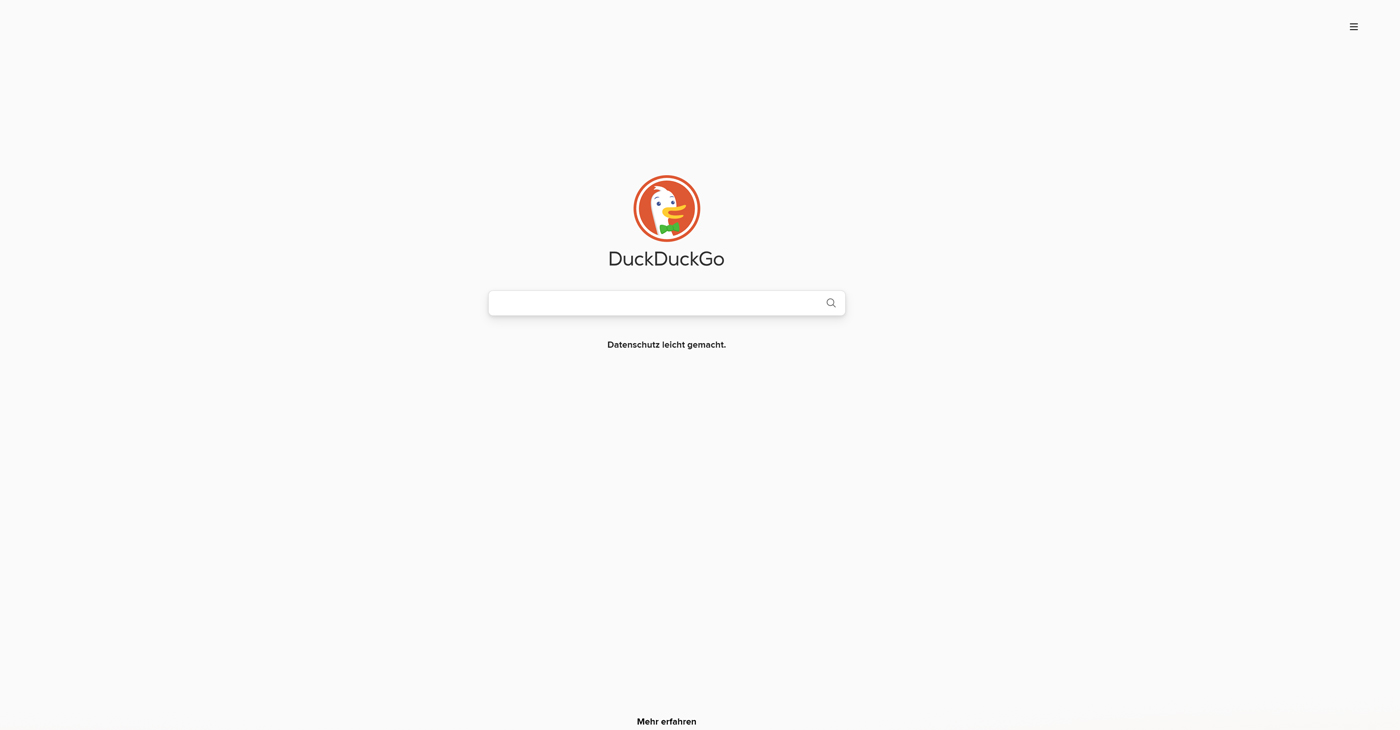
DuckDuckGo is a star among privacy-focused search engines. Founded in 2008 by Gabriel Weinberg, the search engine with a duck mascot has become one of the best-known alternatives to Google. Its promise: no tracking, no storage of personal data and no personalised ads.
How it works: DuckDuckGo draws heavily on Bing, adds hundreds of other sources and operates its own crawler, DuckDuckBot. The result is a familiar search experience without building a personal search profile.
| Pro | Cons |
|---|---|
| Strong privacy protections without personal tracking | Search results sometimes less comprehensive than Google |
| Bangs (!g, !w, !yt) for direct searches on other sites | Local search not as accurate |
| Clean, ad-free interface | No personalisation can make some results less relevant |
| Own browser with tracking protection |
Startpage – Google results without Google tracking
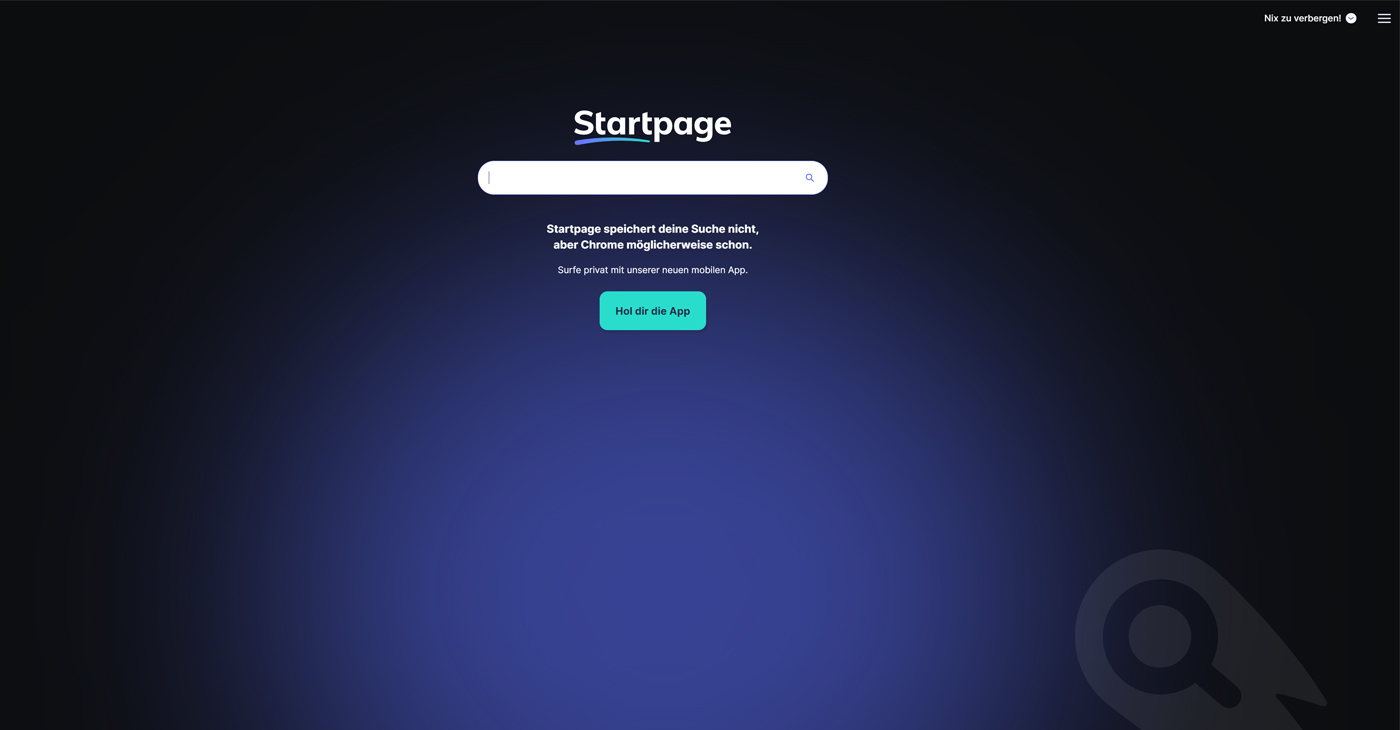
Startpage acts as a privacy layer between you and Google. It retrieves Google results without passing your identity to Google, giving you familiar results with less tracking.
And here is the surprising part: Startpage’s “Anonymous View” lets you visit websites through a proxy. The destination site sees Startpage, not you. This is useful for research when you do not want to leave traces.
| Pro | Cons |
|---|---|
| Google quality without Google tracking | Sometimes slightly slower due to proxy redirection |
| Anonymous View for anonymous browsing | Dependent on Google (if Google changes, Startpage changes) |
| Dutch company (EU data protection) | Anonymous View may restrict website functions |
Qwant — a European search alternative
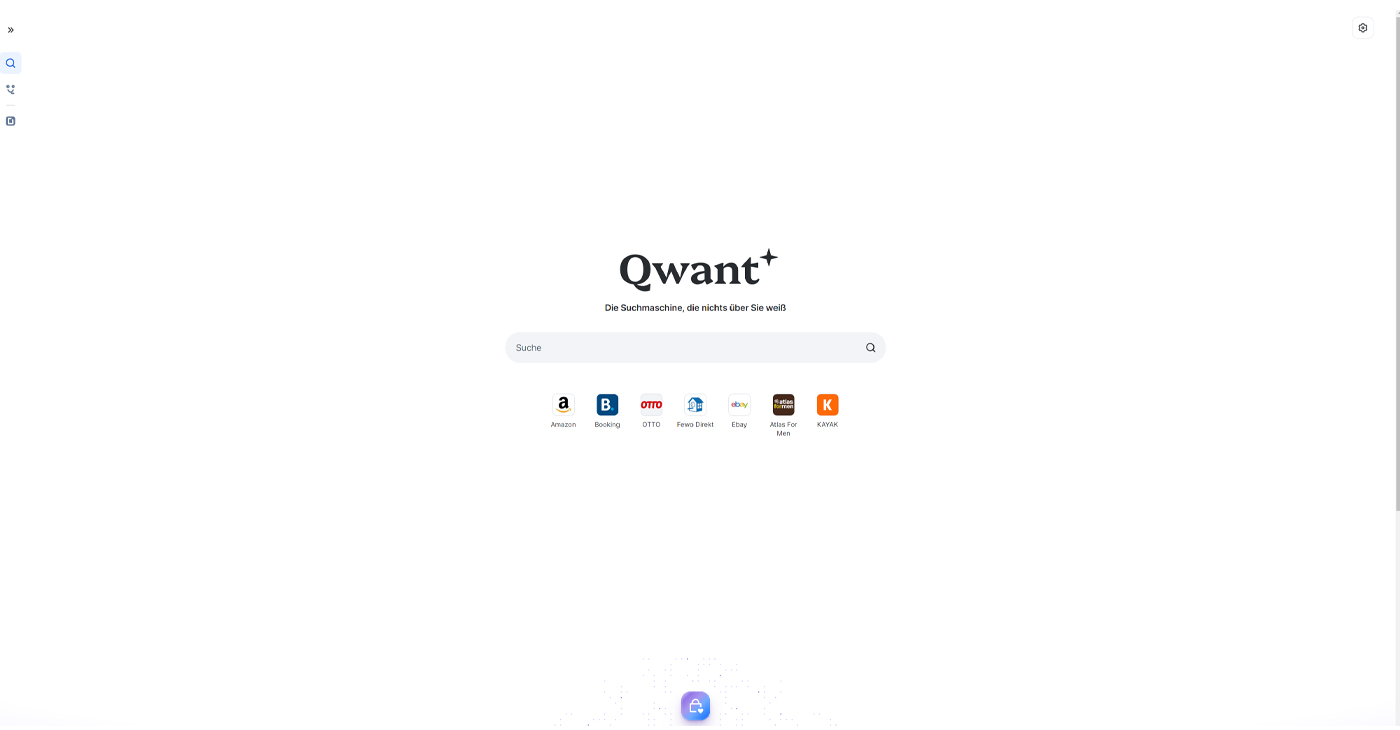
Qwant is France's answer to American tech dominance. Founded in 2013, the search engine advertises strict GDPR compliance and its own index for European content. Qwant is particularly popular in France – the French government even uses Qwant as its default search engine.
Reality: Qwant combines its own crawling with data from Bing. Its clear interface separates web, news and social results, making it a useful option for European users who value greater control over their data.
| Pro | Cons |
|---|---|
| 100% GDPR compliant | Search results often less comprehensive than Google |
| European provider with servers in the EU | Weaker for English search queries |
| Qwant Junior especially for children | Partially dependent on Bing index |
| Clear categorisation of results |
Specialised search engines
Ecosia – searches to support rainforests
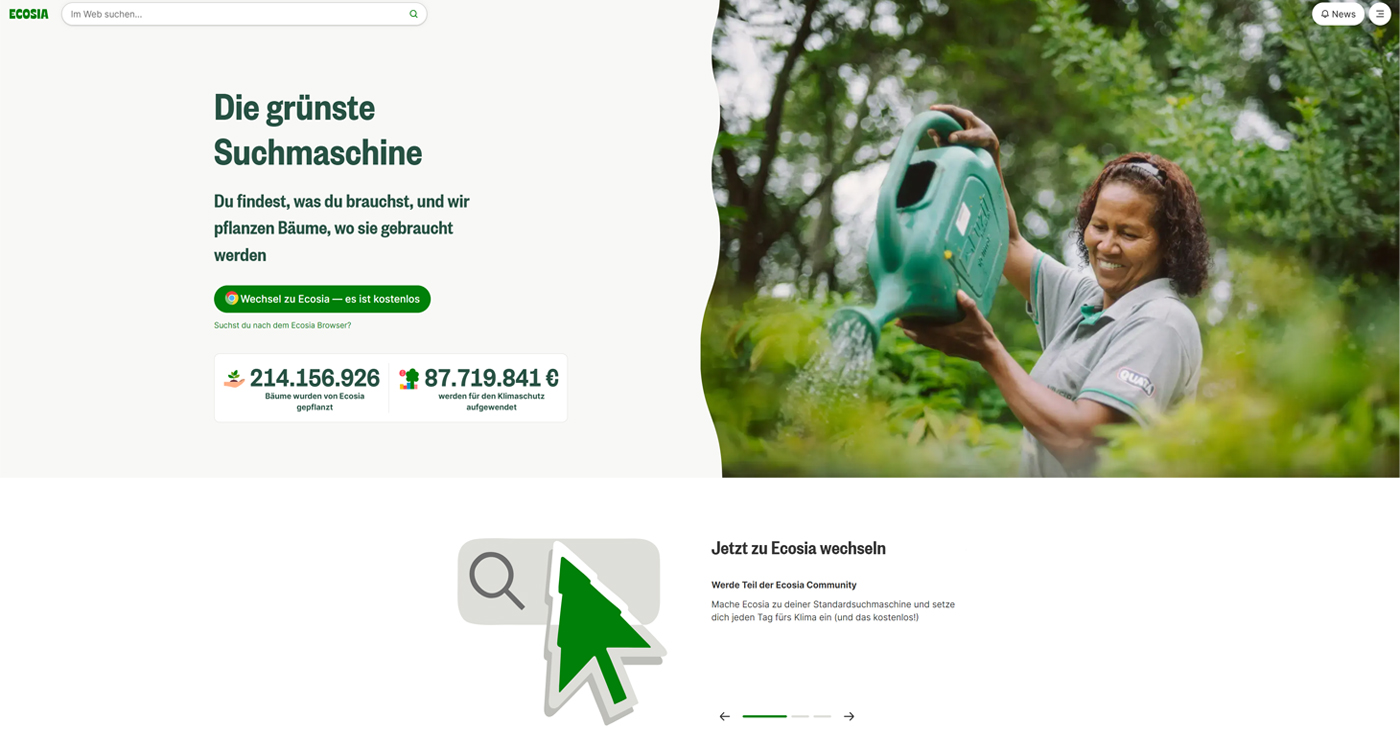
Ecosia uses advertising revenue to support tree-planting projects around the world. The Berlin-based company reports its impact publicly and provides an alternative for users who want their searches to help fund environmental work.
What matters: Ecosia publishes monthly financial reports showing how its income is used. Results draw on Bing and Ecosia’s own systems; the company estimates that roughly 45 searches help finance one tree.
| Pro | Cons |
|---|---|
| Genuine reforestation projects with proof | Search results are based on Bing (not always optimal) |
| Servers powered with renewable energy | Less focused on data protection than DuckDuckGo |
| Full transparency regarding finances | Includes advertising, which helps fund tree planting |
| German company |
Brave Search: Independent and ad-free
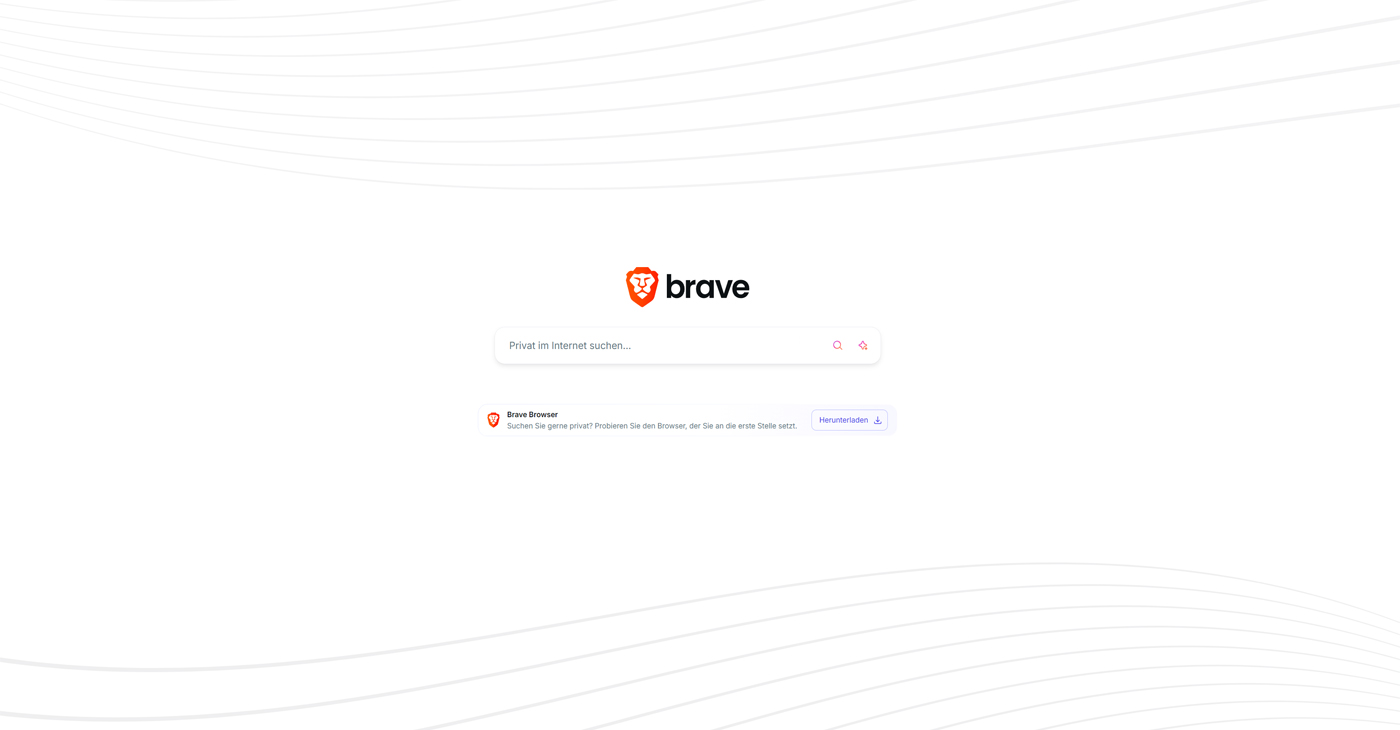
Brave Search comes from the company behind the Brave browser and is one of the few alternatives with its own search index. It launched in 2021 and made its independent index the default source in 2023.
How it works: Brave Search offers a “Goggles” feature that lets you influence how results are ranked. Want to see only tech blogs, or leave out results from Pinterest? Goggles lets you do both.
| Pro | Cons |
|---|---|
| Independent index rather than relying on Google or Bing | Index even smaller than Google's |
| Ad-free (optional premium) | Sometimes less up-to-date results |
| Goggles for personalised rankings | Best integrated with the Brave browser |
| Seamless integration with Brave Browser |
Swisscows: a family-friendly search engine from Switzerland
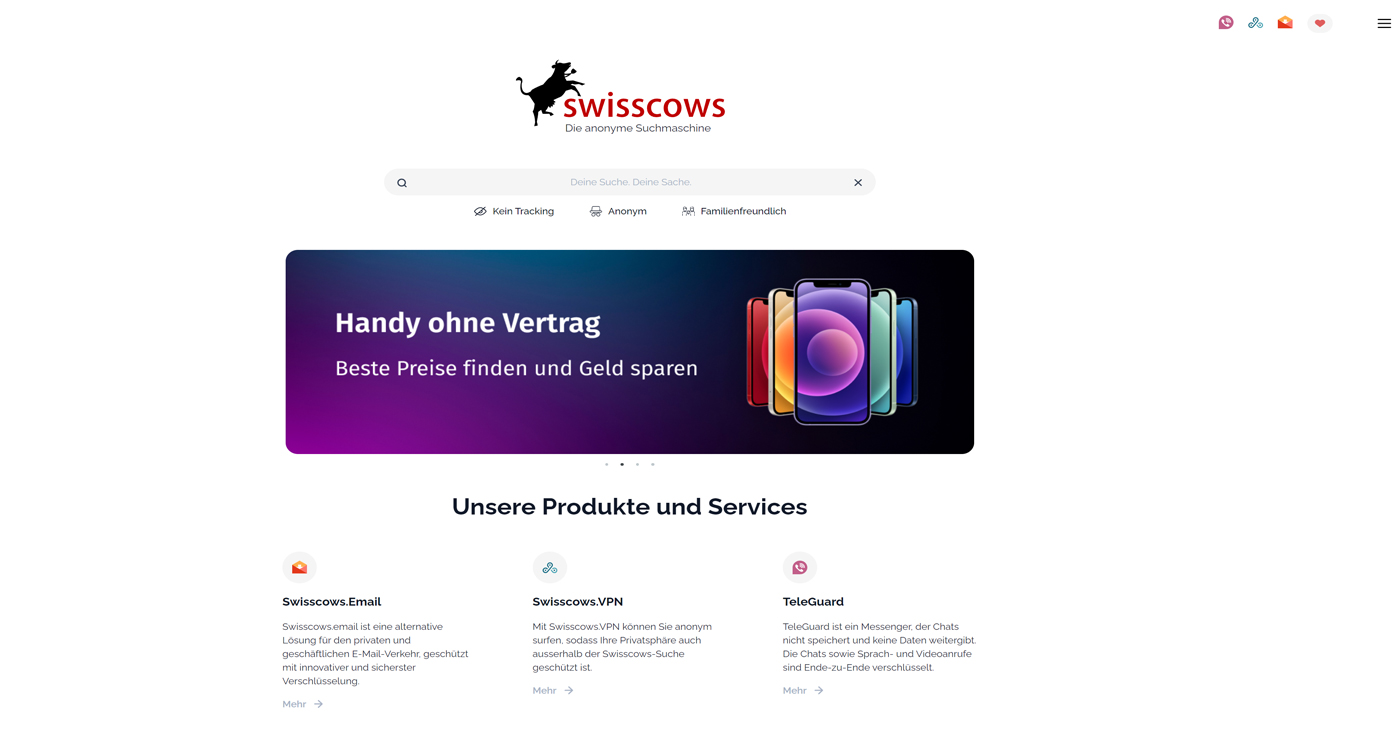
Swisscows is designed for families that want unsuitable material filtered from everyday searches. Its adult-content filter is enabled by default rather than requiring separate setup.
Worth knowing: Swisscows uses semantic analysis to understand the context of search queries. The servers are located in Switzerland (strict data protection laws), and no IP addresses or personal data are stored.
| Pro | Cons |
|---|---|
| Adult-content filter enabled by default | Filters sometimes too strict (also blocks harmless content) |
| Swiss data protection (one of the strictest in the world) | Search results not as comprehensive |
| No storage of IP addresses | Less relevant for adults without children |
| Semantic search technology |
Mojeek: an independent UK search engine
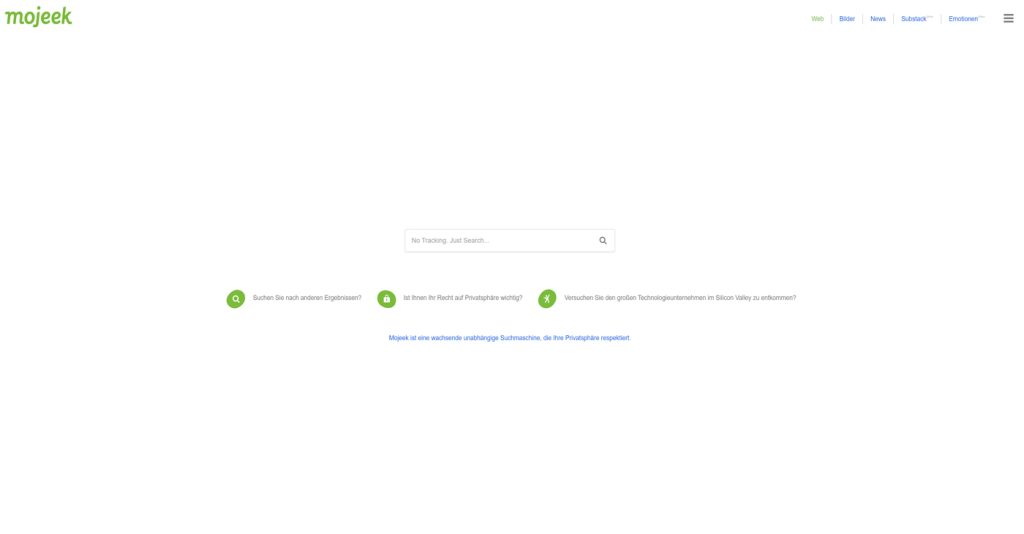
Mojeek is the underdog among search engines – and proud of it. Since 2004, the British search engine has been operating its own index with over 8 billion pages. No Bing data, no Google results, no compromises.
Worth knowing: Mojeek does not collect personal data or create user profiles. Search results are based solely on the relevance of the content – not on what you have searched for previously.
| Pro | Cons |
|---|---|
| Fully independent index | Smaller index than Google (8 billion vs. hundreds of billions) |
| No filter bubble due to lack of personalisation | Sometimes less relevant results |
| Strict no-tracking approach | Less well known, smaller community |
SearXNG: The open-source meta search engine

SearXNG, the actively developed successor to Searx, is the Swiss Army knife of search engines. As a metasearch engine, it combines results from more than 70 sources—including Google, Bing, DuckDuckGo and Wikipedia—without directly revealing to those search engines who made the query.
Information: SearXNG is open source and can be self-hosted by technically experienced users. Public instances are available for everyone else, although their reliability and privacy policies can vary.
| Pro | Cons |
|---|---|
| Combines over 70 search sources | Public instances vary in quality and reliability |
| Open source and self-hostable | Self-hosting requires technical expertise |
| Fully customisable | Sometimes slower due to aggregation |
| Maximum privacy with self-hosting |
Regional search engine giants
Google is not the leading search engine in every country. Some markets are dominated by regional providers, each with its own strengths, limitations and political context.
Yandex – Russia's answer to Google
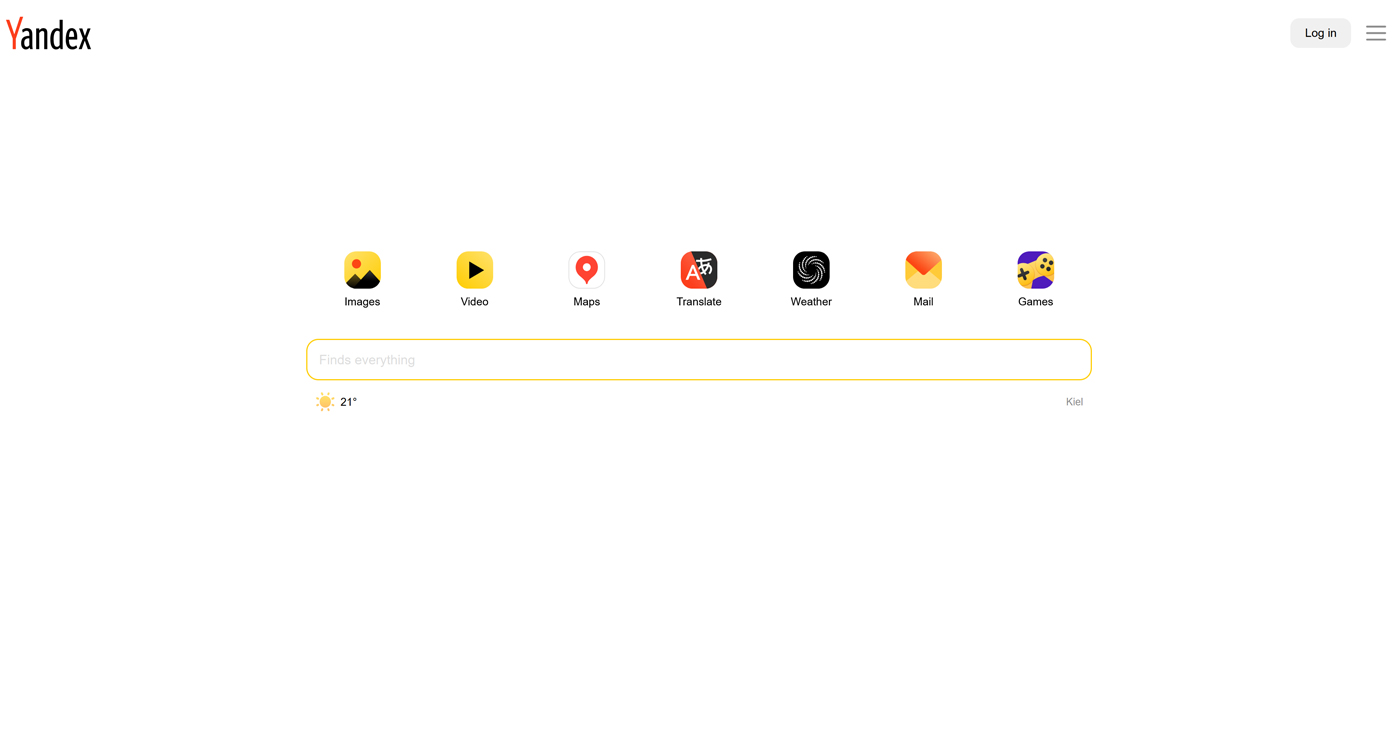
Yandex is to Russia what Google is to the rest of the world – the dominant search engine with a market share of over 60%. The company offers a complete ecosystem: email, maps, cloud storage, taxi service (Yandex.Taxi), even food delivery.
Reality: For Russian-language searches, Yandex often delivers better results than Google. However, its proximity to the Russian government raises significant data protection issues, especially since 2022. For users outside Russia, there are few reasons to use Yandex.
| Pro | Cons |
|---|---|
| Best results for Russian-language content | Significant data protection concerns (proximity to government) |
| Comprehensive ecosystem (mail, maps, cloud) | Limited relevance for most users outside Russia |
| Good image search | Subject to greater scrutiny since 2022 |
Baidu: China’s dominant search engine
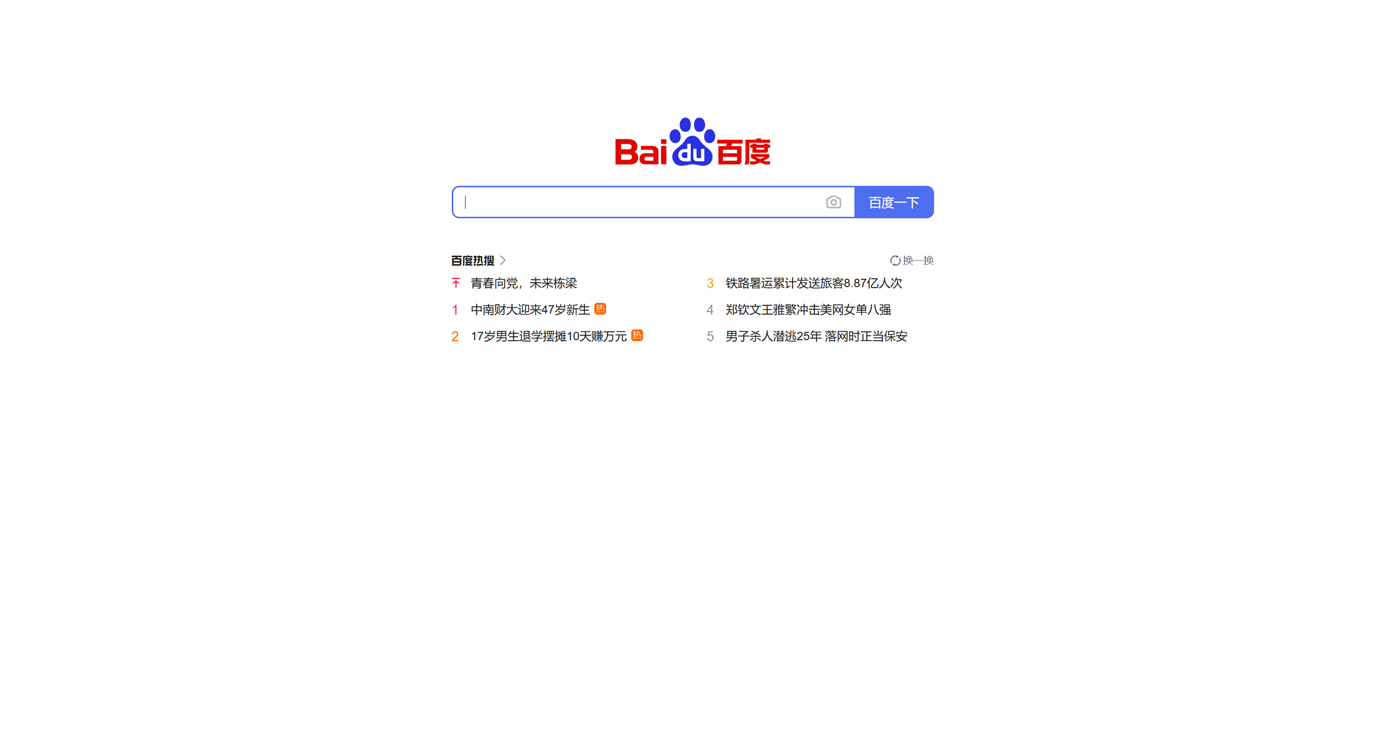
Baidu is by far the largest search engine in China – and for one simple reason: Google has been blocked there since 2010. With a market share of over 70% in China, Baidu is a giant, but one that is heavily controlled by the Chinese government.
The uncomfortable reality: Baidu operates within China’s censorship system, so politically sensitive subjects, international news outlets and many Western services may be blocked or omitted. It offers limited value to most users outside China.
| Pro | Cons |
|---|---|
| Best results for Chinese-language content | State censorship of search results |
| Extensive ecosystem (Baidu Maps, Baidu Cloud) | Massive data protection issues |
| A major option for users in mainland China | Irrelevant for users outside China |
Bing: Microsoft's underrated alternative

Bing is often dismissed too quickly. Microsoft’s search engine has developed into a capable alternative with a worldwide share of roughly 3–4%, representing hundreds of millions of users.
What matters: Bing is closely integrated with Windows, Edge and Microsoft services. It offers strong image and video search, a rewards programme and search data used by several other providers.
| Pro | Cons |
|---|---|
| Very good image search and video search | Data collection similar to Google |
| Bing Rewards (points for search queries) | Less comprehensive than Google for niche topics |
| Seamless Windows and Edge integration | Bing advertising sometimes intrusive |
| Solid search results |
AI search engines: The new generation
Search no longer has to mean scanning a page of links. AI search tools can produce a direct answer that summarises and connects information from several sources.
Microsoft Copilot: an AI assistant with web search
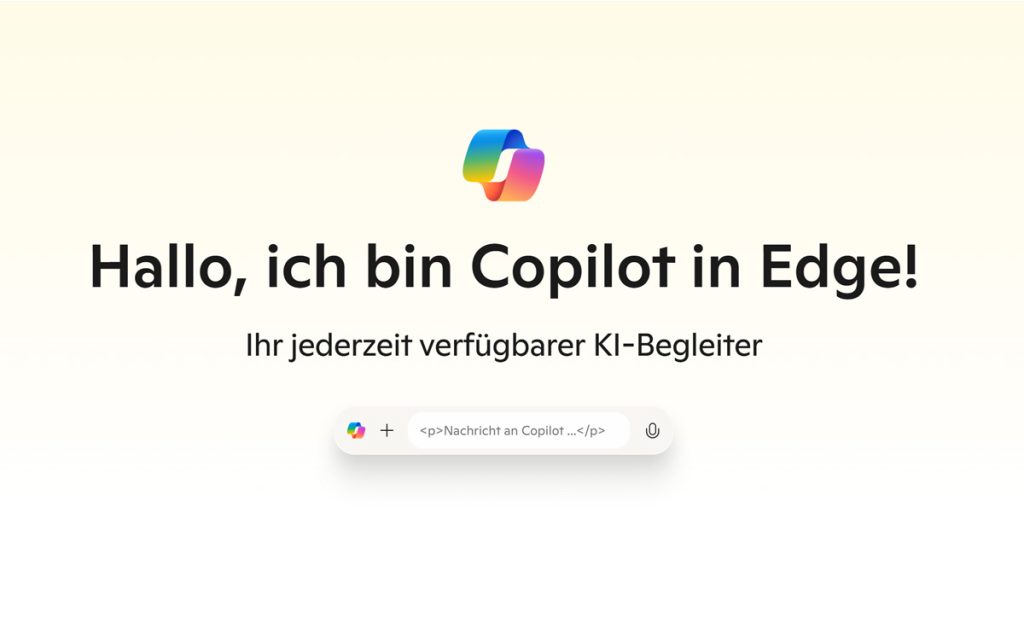
Microsoft Copilot, formerly Bing Chat, extends Bing with conversational AI. It can answer follow-up questions, summarise material and explain complex topics in context.
Key feature: Copilot is free to use and integrated directly into Windows, Edge, and Microsoft 365. The Pro version offers faster responses and access to the latest GPT versions.
| Pro | Cons |
|---|---|
| GPT-4 available for free use | Tied to the Microsoft ecosystem |
| Interactive conversation with follow-up questions | Data collection by Microsoft |
| Deep Microsoft integration | Sometimes overly cautious responses |
| Can generate images (DALL-E 3) |
Perplexity AI: The Answer Engine
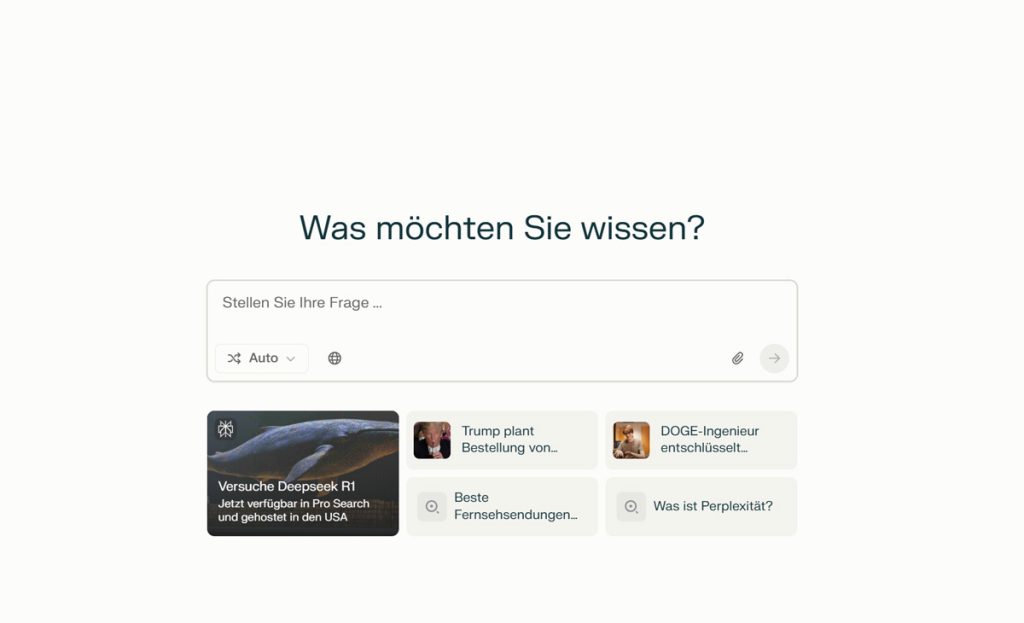
Perplexity combines conversational answers with linked sources. Instead of returning only a list of results, it produces a summary and lets you open the material behind its claims.
Information: Perplexity combines live web results with AI models. Its deeper research modes can explore follow-up questions and produce more detailed answers, making the service particularly useful for research-heavy tasks.
| Pro | Cons |
|---|---|
| Answers with references (verifiable) | Pro features require a paid subscription |
| Pro Search for in-depth research | Sources and summaries can still be inaccurate |
| Fast, accurate summaries | Less suitable for simple fact-finding |
| Can also be used free of charge |
You.com & YouChat: Modular AI search
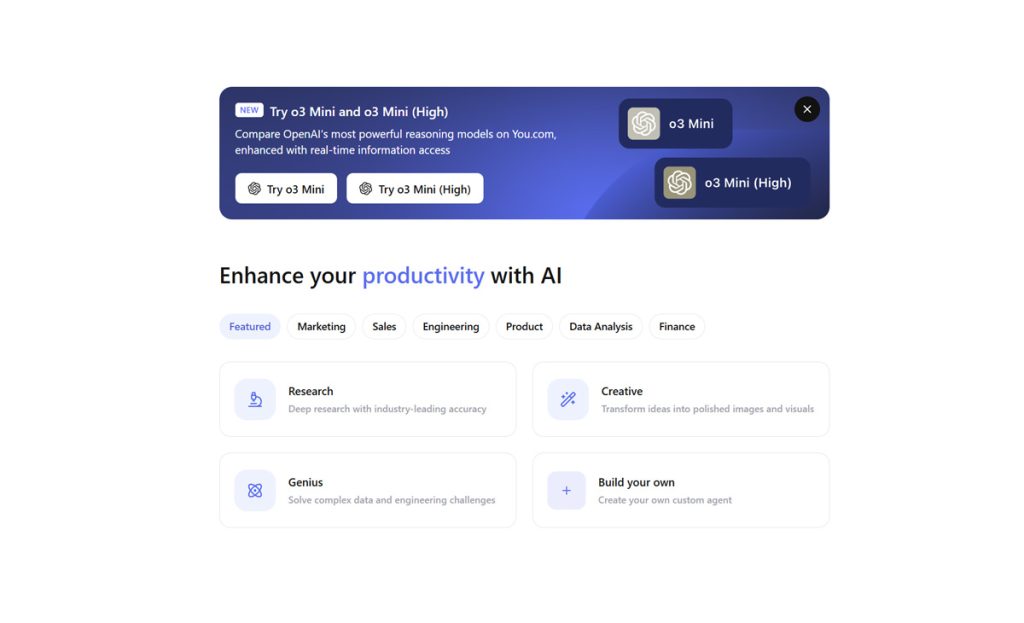
You.com combines conventional web search with specialised tools for areas such as code, images, video and news. YouChat provides a conversational interface for asking follow-up questions.
What matters: You.com offers access to several AI models and can also be used as a conventional web search engine, giving users more flexibility than a single-model assistant.
| Pro | Cons |
|---|---|
| Choice between several AI models | Less well known than competitors |
| Modular design with specialised apps | Interface can appear cluttered |
| Strong focus on privacy | Paid premium features |
| Works even without AI |
Specialised search engines for specific needs
A general-purpose search engine can do many things, but a specialised tool is often better suited to a specific task.
Academic research
Google Scholar — A broad, free index for academic papers, theses and other scholarly work, including citation data.
PubMed — A leading source for medical and biomedical literature, maintained by the US National Library of Medicine.
Job search
Indeed — A large job-search platform that aggregates vacancies from many sources.
LinkedIn — More than a job board: a professional network with extensive recruitment features.
Price comparison
Idealo — A major German price-comparison service with price history and retailer reviews.
Geizhals — Particularly strong for technology and electronics, and widely used in Germany, Austria and Poland.
Which search engine is right for you?
There is no single “best” search engine, only the one that best matches your priorities. Here is a quick guide:
- Maximum privacy: DuckDuckGo or Startpage
- Google quality without tracking: Startpage
- European solution: Qwant or Ecosia
- Environmental impact: Ecosia
- Family-friendly: Swisscows
- Complete independence: Brave Search or Mojeek
- For technology enthusiasts: SearXNG (self-hosted)
- AI-assisted research: Perplexity or Microsoft Copilot
Five steps for changing your search engine
- Test two or three alternatives in parallel — Use each one for your typical searches for a week
- Change your browser’s default search engine — Look for “Search” or “Search engine” in the browser settings
- Install an official browser extension if needed — Some alternatives offer extensions with additional privacy controls
- Use bangs or other shortcuts — DuckDuckGo’s “!g”, for example, sends a search to Google when you need it
- Stay flexible — It is fine to use Google for particular searches; this is about choice, not perfection
Conclusion: more choice is good for search
The search market now offers more credible alternatives than it did a few years ago. Privacy-focused services, independent indexes, AI research tools and specialist platforms each solve different problems.
You do not have to commit to one provider. Many people benefit from combining tools: DuckDuckGo for everyday searches, Perplexity for research and Google Scholar for academic material, for example.
The best search engine is the one that meets your needs, not the one that follows you most closely.
Further alternatives to explore
A few other services are also worth exploring:
- Kagi — A paid, advertising-free search engine with its own index and extensive customisation.
- Neeva – Was an ad-free search engine, acquired by Snowflake in 2023 (service discontinued)
- Phind — An AI search tool designed for software development and technical questions.
- Andi — A conversational AI search assistant with a visual interface.
- Wolfram Alpha — More computational knowledge engine than conventional search engine, particularly useful for calculations and structured facts.
- ChatGPT Search – OpenAI's search integration in ChatGPT (as of 2025 for Plus users)
- Google Gemini – Google's AI assistant with search integration
What search engines are there?
| search engine | Category / Special feature | Advantages | Possible disadvantages |
|---|---|---|---|
| DuckDuckGo | Data protection-oriented | Anonymous searches without tracking, clean interface | Less comprehensive results |
| Startpage | Google results anonymised | Google quality + data protection | May be slower when using the proxy |
| Qwant | European privacy-focused alternative | GDPR compliant, no tracking | Not as powerful as Google |
| Ecosia | Sustainability (planting trees) | Searches help fund tree-planting projects | Bing-based results sometimes inaccurate |
| Brave Search | Own index, highly privacy-friendly | No tracking, independent search base | Index even smaller than that of large providers |
| Swisscows | Family-friendly and safe | Automatically blocks inappropriate content | Less suitable for complex searches |
| Mojeek | Own, independent search index | No influence from large corporations | Smaller database |
| Searx | Open-source metasearch engine | High adaptability, combines many sources | Results partly heterogeneous |
| Yandex | Market leader in Russia | Many additional services | Privacy concerns |
| Baidu | Leading search engine in China | Google-like features | Strict censorship, restricted content |
| Bing | Microsoft alternative | Good image search, Windows integration | Smaller reach than Google |
| AI-based search engines | |||
| Copilot (Bing Chat) | AI assistant-based search | Interactive responses, GPT-4 support | Not always classic search result format |
| Perplexity AI | Direct answers from AI | Very fast, accurate summaries | Not ideal for traditional results lists |
| YouChat (You.com) | Search + chat interface | Dialogue-based explanations & summaries | Search results depend on the model |
FAQ: alternative search engines
Why use an alternative search engine?
Alternative search engines can offer less tracking, independent indexes, stronger privacy controls, regional coverage or specialist features that a general-purpose provider may not prioritise.
Which search engine offers the strongest privacy?
DuckDuckGo, Startpage and Qwant all emphasise privacy and avoid building the same kind of personalised search profile. The exact protection differs by provider; a carefully configured self-hosted SearXNG instance offers the greatest direct control.
Which search engines are suitable for children?
Qwant Junior and family-focused services such as Swisscows filter unsuitable material automatically and are designed for use by families or schools.
Why do different search engines return different results?
Providers use different indexes, ranking systems and data sources. As a result, coverage, freshness and relevance can vary considerably between search engines.
Which search engine plants trees and how does it work?
Ecosia is a search engine that helps fund tree-planting projects. It uses income from advertising to support those projects. The company also publishes monthly financial reports so readers can see how it uses its revenue. For a current tree count, check Ecosia’s own updates rather than relying on an older figure.
Which search engine is the best?
The most widely used general-purpose search engine is Google, thanks to its market share and broad index. For users who prioritise privacy, alternatives such as DuckDuckGo or Startpage may be a better fit.
What are the drawbacks of switching away from Google?
Depending on the provider, results may be less comprehensive, specialised features may be missing, or performance may vary for niche topics. Some services are available only in certain regions or require technical knowledge, such as self-hosting.